In a world where technology can replicate almost anything, what makes mechanical watchmaking truly irreplaceable?
Technology can replicate a function, but never an intention or an emotion.
A mechanical watch no longer truly answers a need today — no one needs a watch to tell the time. It is a deliberate choice. An aesthetic, cultural, almost intimate one.
It can embody a memory, a date, a milestone, but also a certain vision of beauty, craftsmanship, and the value of time. That is where its true singularity lies: in what it expresses, without ever needing to say it. And that is precisely why it will never disappear.
Has storytelling taken on too great a role compared to the product itself?
Storytelling becomes a problem when it compensates for a lack of substance. For a long time at Speake Marin, we tended toward the opposite extreme.
Out of humility, or the belief that the product could speak for itself, we said very little. Today, however, a client is no longer simply buying a timepiece. They want to understand what they are wearing, and why they have chosen it.
The way we see it, storytelling is not a marketing tool. It is first and foremost a tool for transparency. Explaining how a piece is conceived, the choices that were made, the technical constraints, the challenges encountered — this is what creates a genuine connection.
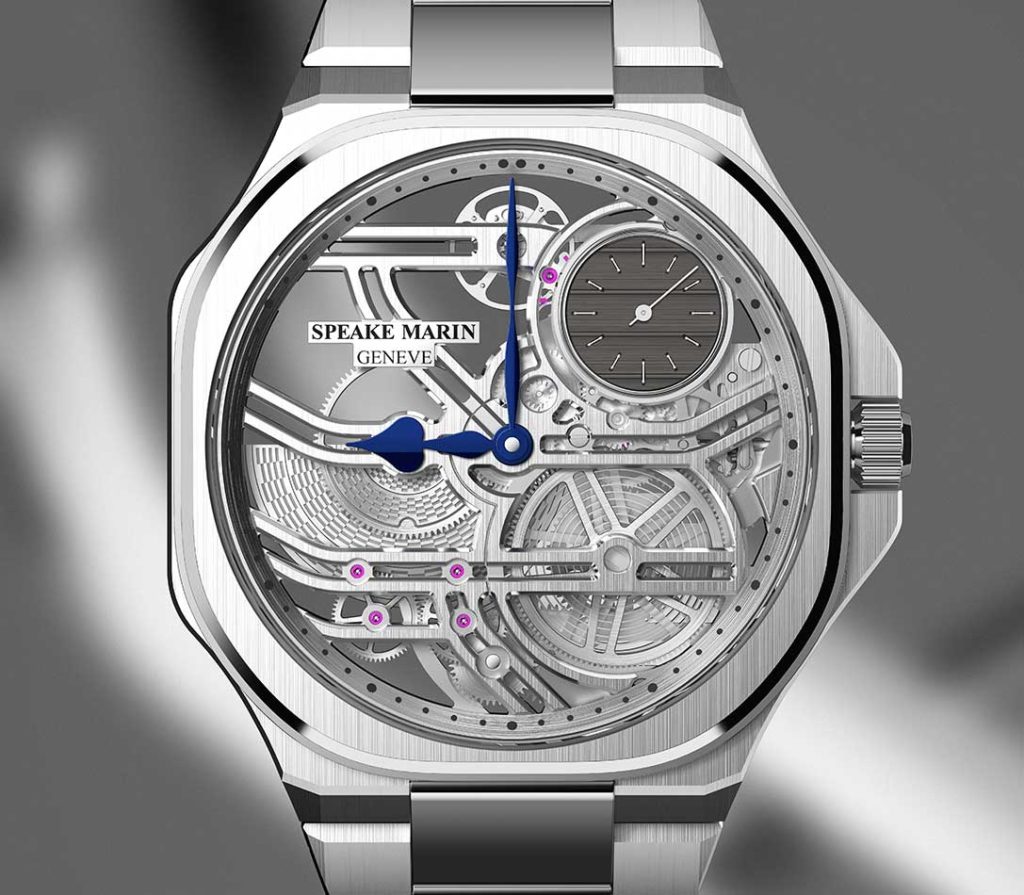
Not an artificial narrative, but a form of truth that the client can embrace and naturally feel compelled to share. The story should enhance the piece, place it in context, and make visible the work of the teams who sometimes dedicate more than three years to a single project.
The product remains the starting point. But conveying what it truly involves, with sincerity, is now an integral part of its value. Otherwise, storytelling is just noise.
Does vintage inspire your creations… or does it constrain them?
Vintage is a reference, not a direction. Speake Marin will soon celebrate its 25th anniversary, which, in the watchmaking landscape, almost makes us newcomers. But as in music, one cannot improvise without first mastering the scales.
Vintage reminds us of fundamental principles — proportion, legibility, and elegance — that remain highly relevant today. But it should never become a refuge. What makes this industry so fascinating is precisely its ability to reinvent itself. And true reinvention only happens when one has mastered one’s origins.
Today, we are witnessing a strong return to historical references, with the revival of many watchmaking Houses. It is an interesting movement, but it raises a fundamental question: how far can the future be built solely on the past?
Creating today while looking only at yesterday is a form of comfort. And comfort has never driven a Maison forward; it ultimately limits it. We respect this heritage and may echo it when it makes sense, but always with the intention of bringing a contemporary perspective.
Our role is to use it as a point of reference, not a constraint. Our role is to draw inspiration from it in order to create timepieces rooted in their time, with their own identity. In other words: to understand the past, without ever depending on it.
At what point does a watch begin to tell a story or evoke emotion more than it simply tells the time?
For us, it begins even before the watch exists — in the very first stages of creation. A watch is always born from an intention, a vision, a creative tension. That is where its first story takes shape.
For the client, it is different. Everything changes the moment an attachment is formed. A watch becomes something more than an instrument when it is chosen, not simply purchased — when it reflects a personality, a moment in life, a conviction, or sometimes even a projection of oneself.
It is at that precise moment that it shifts from a functional object to an object of desire. And that is where watchmaking truly finds its meaning. Because time is available everywhere. Emotion, however, is not. From that point on, the watch no longer simply tells the time. It accompanies, it marks, it endures.